When the Rain Stops: How Prolonged Drought Quietly Undermines Septic System Health
Americans living in drought-prone regions—the Southwest, the Southern Plains, the Pacific Coast—have grown accustomed to conversations about water conservation, lawn restrictions, and reservoir levels. What rarely enters those conversations is the condition of the septic systems buried beneath millions of residential properties across these same regions. Yet the relationship between drought and septic performance is direct, measurable, and consequential in ways that can produce expensive and environmentally damaging outcomes if left unaddressed.
This is not a theoretical concern. As drought cycles intensify in frequency and duration across much of the continental United States, the stress placed on conventional septic systems—particularly those installed in clay-heavy or compaction-prone soils—has become an increasingly practical issue for homeowners to understand and manage.
How a Septic System Is Designed to Work—and Why Moisture Matters
A conventional septic system relies on a carefully balanced interaction between liquid effluent, soil, and microbial life. Wastewater exits the home, enters the tank where solids settle and anaerobic bacteria begin breaking down organic material, and then flows as clarified liquid—called effluent—into a network of perforated pipes within the drain field. There, the effluent disperses into the surrounding soil, where aerobic bacteria, filtration, and natural biological processes complete the treatment before the water eventually rejoins the groundwater table.
Every stage of this process depends on appropriate moisture conditions. Soil that is too wet can become saturated and lose its ability to absorb effluent. But soil that is too dry presents its own set of problems—ones that are less immediately visible but no less damaging over time.
Soil Compaction and Structural Stress
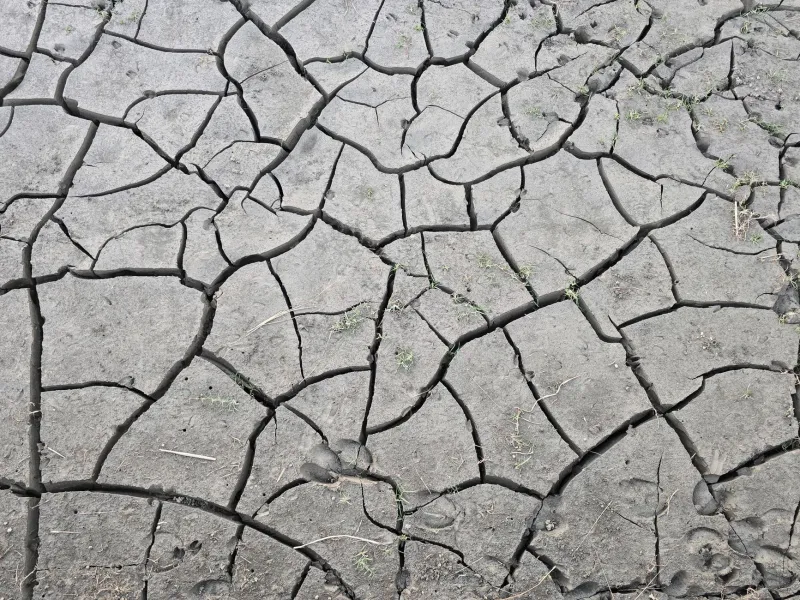
One of the most significant drought-related threats to septic systems is soil compaction. As the ground loses moisture over an extended dry period, fine-grained soils—particularly those with high clay content, common across much of the Southeast, Midwest, and Texas—contract and harden. This contraction can place mechanical stress on buried pipes, distribution boxes, and tank walls, potentially causing cracks or misalignments that would not occur in adequately hydrated ground.
In extreme cases, severe soil shrinkage creates gaps between the tank and surrounding earth, which can compromise structural support and, in older systems with concrete components, accelerate the formation of cracks through which groundwater can infiltrate during subsequent rain events—or through which effluent can escape during dry periods.
Beyond structural concerns, compacted soil has reduced permeability. When the rains eventually return after a prolonged drought, soil that has been significantly compacted may absorb water more slowly than it did prior to the dry period. This means a drain field that functioned adequately before the drought may struggle to process effluent at the same rate afterward, effectively reducing the system's operational capacity.
Bacterial Activity and Treatment Effectiveness
The microorganisms responsible for breaking down waste inside the tank and within the drain field soil require moisture to survive and function. While the tank itself maintains a liquid environment, the aerobic bacteria in the drain field's soil layer depend on appropriate soil moisture to remain active. Extended drought conditions can suppress or kill off portions of this microbial community, reducing the biological treatment capacity of the field.
This effect is most pronounced in shallow drain fields and in regions where summer temperatures compound the desiccation stress. A drain field with diminished bacterial activity may release effluent that is less thoroughly treated than it should be—a concern with direct implications for groundwater quality and, in systems near surface water bodies, for local aquatic ecosystems.
It is worth noting that this bacterial suppression is not always permanent. Microbial populations can recover when moisture returns, but the recovery timeline varies by soil type, depth, and the severity of the drought. During the recovery period, the system warrants careful management.
Regional Variations Across the United States
The drought-septic relationship does not manifest identically across all regions. In the arid Southwest—Arizona, Nevada, New Mexico—septic systems are routinely engineered with regional soil conditions in mind, and homeowners in these areas may already practice water-conscious habits that inadvertently protect their systems. However, even well-adapted systems face stress during multi-year drought cycles of the kind that have characterized much of the Colorado River basin in recent years.
In the Southeast and Mid-Atlantic states, where clay soils are prevalent and drought conditions have become more frequent due to shifting precipitation patterns, homeowners may be less prepared for the compaction and cracking risks associated with dry spells. Systems in these regions that have not been inspected or pumped recently may be particularly vulnerable.
In the Pacific Northwest and Northern California, where drought conditions have intensified significantly in recent decades, the combination of aging infrastructure and increasingly unpredictable rainfall creates a heightened risk environment that warrants proactive attention.
Conservation Strategies That Actually Protect the System
Reducing household water consumption during drought periods is widely understood as a civic responsibility. What is less widely understood is that targeted conservation practices also serve as a direct form of septic system protection. The strategies that follow are not merely environmentally conscientious—they are operationally sound.
Distribute water use across the day. Running multiple water-intensive appliances simultaneously—dishwasher, washing machine, showers—floods the system with more liquid than it can process efficiently in a short window. Spreading usage across morning, afternoon, and evening reduces hydraulic stress on both the tank and the drain field.
Repair leaks promptly. A slow-dripping faucet or a running toilet can introduce hundreds of gallons of unnecessary water into the system each week. During drought conditions, when the drain field's absorption capacity may already be reduced, this additional volume compounds the stress.
Use water-efficient fixtures and appliances. High-efficiency toilets, low-flow showerheads, and ENERGY STAR-rated washing machines reduce the total volume of water entering the system without requiring behavioral changes. These investments pay dividends in both water conservation and septic longevity.
Avoid irrigation near the drain field. Directing sprinkler systems or drip irrigation toward the drain field area during drought conditions may seem helpful, but it can saturate the soil unevenly and introduce excess water that disrupts the treatment process. Keep irrigation targeted away from this zone.
Maintain a regular pumping schedule. A tank that is not pumped on a routine basis accumulates solids that reduce its liquid capacity, forcing effluent toward the drain field at a faster rate. During drought conditions, when the field's processing capacity is reduced, a full or near-full tank amplifies the risk of overload significantly.
The Longer View: Drought, Climate, and System Longevity
The connection between drought and septic performance is, at its core, an environmental responsibility issue. Septic systems that function properly protect groundwater from contamination. Systems that fail under stress—whether from neglect, age, or climate-related soil changes—can introduce pathogens and excess nutrients into aquifers that supply drinking water to rural communities across the country.
At AccuAA Septic, our commitment to clean systems and a clear conscience extends beyond the individual property. A well-maintained septic system is a form of environmental stewardship. Understanding how drought affects your system—and taking deliberate steps to reduce that impact—is one of the most practical contributions a homeowner can make to the health of the water systems that surround them.
If your property is located in a drought-affected area and your system has not been professionally inspected or pumped within the past three years, now is the appropriate time to schedule a comprehensive evaluation. The cost of that service is a fraction of what soil remediation, drain field replacement, or groundwater remediation may require if a stressed system is allowed to fail without intervention.