The Bathroom Shelf Betrayal: How Your Luxury Soaps and 'Natural' Products Are Quietly Poisoning Your Septic System
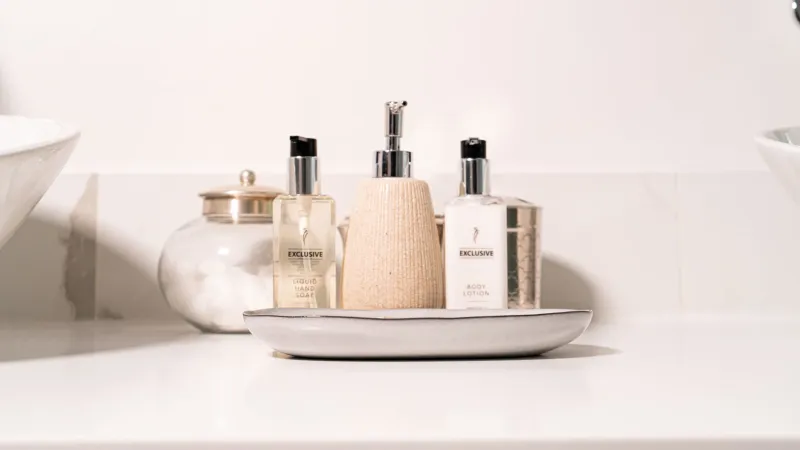
There is a quiet contradiction playing out in bathrooms across America. Homeowners spend carefully on premium soaps, artisan shampoos, and specialty bath products—often choosing items labeled 'natural,' 'plant-based,' or 'biodegradable' with the genuine belief that they are making a responsible choice. What the label does not mention, and what no marketing campaign will voluntarily disclose, is that many of these products carry ingredients that are acutely harmful to the microbial ecosystem living inside a septic tank.
That ecosystem is not incidental to how a septic system functions. It is the system. Without a thriving population of anaerobic bacteria breaking down organic solids, a septic tank becomes little more than an expensive underground holding vessel—one that will eventually back up, overflow, or fail entirely. Every product that travels through a drain has the potential to either support or undermine that biological balance. The problem is that most homeowners have no practical framework for evaluating which products pose a genuine threat.
Why 'Natural' Is Not a Synonym for 'Septic-Safe'
The term 'natural' carries no regulatory definition in the context of personal care products. A manufacturer may use the word freely, regardless of whether the formula contains synthetic preservatives, petroleum-derived surfactants, or antimicrobial compounds derived from plant sources. 'Biodegradable' is similarly ambiguous—a substance can be technically biodegradable in an open environment while still being toxic to the specific bacterial strains that make a septic system functional.
Consider triclosan and triclocarban, antimicrobial agents that were common in antibacterial soaps before regulatory scrutiny increased. While many formulas have moved away from these specific compounds, the underlying challenge persists: any ingredient designed to kill bacteria on skin does not selectively deactivate once it enters the drain. It continues doing what it was formulated to do, and what it encounters next is the bacterial population your septic tank depends upon.
Essential oils present a similar problem. Lavender, tea tree, eucalyptus, and peppermint oils—ingredients celebrated in natural product marketing—are recognized antimicrobial agents. A small amount may not cause measurable harm, but a household that uses multiple essential oil-based products across daily showers, hand-washing, and bath routines introduces a cumulative antimicrobial load that can meaningfully suppress septic tank bacterial activity over time.
The Guest Bathroom Problem
Decorative soaps deserve particular attention because their purpose is often more aesthetic than functional. Homeowners frequently place artisan or specialty bar soaps in guest bathrooms and powder rooms as a design element—soaps that may sit unused for months, then see heavy use during gatherings or holidays. These products are rarely selected with septic chemistry in mind.
Artisan soaps frequently contain high concentrations of fragrance compounds, colorants, and botanical additives that have no demonstrated safety profile for septic systems. Some contain clays, charcoal, or exfoliating particles that contribute to solid accumulation in the tank. Others use preservative systems—common in liquid soaps—that are specifically formulated to prevent microbial growth, which is precisely the opposite of what a functioning septic system requires.
The irony is that the guest bathroom, which may see the least daily use, can introduce some of the most concentrated bursts of incompatible chemistry—particularly after a holiday gathering when a dozen guests are using specialty products over a single weekend.
High-Risk Products Commonly Found in Master Bathrooms
Several product categories warrant specific consideration:
Antibacterial hand soaps and body washes. Despite reformulation trends, many products still contain quaternary ammonium compounds—'quats'—that are broadly antimicrobial and persistent in the septic environment.
Luxury shampoos and conditioners. High-end hair care products frequently contain silicones, sulfates in concentrated forms, and preservative systems such as parabens or phenoxyethanol that are not neutral to septic biology.
Foaming bath products and bubble baths. These rely on surfactant systems in high concentrations. While surfactants are not universally harmful, excess surfactant load can disrupt the surface layer of a septic tank and interfere with the separation of solids, liquids, and scum.
Essential oil-based personal care products. As noted, the antimicrobial properties that make these ingredients appealing in a wellness context translate directly into bacterial suppression within the septic tank.
Liquid castile soaps in large quantities. Often praised as a natural alternative, castile soap is generally less harmful than many commercial options—but used in large volumes, its high pH can temporarily alter tank chemistry in ways that stress bacterial populations.
What Actually Belongs in a Septic-Conscious Bathroom
The goal is not to eliminate personal care products but to make selections that do not work against a system that represents a significant portion of a home's infrastructure value. A few practical principles guide better choices:
Look for products that are explicitly labeled as septic-safe—not 'eco-friendly' or 'natural,' but specifically formulated and tested for compatibility with septic systems. Some manufacturers do pursue this distinction meaningfully, and the label carries more practical weight than broader environmental claims.
Minimize antibacterial formulations wherever alternatives exist. Plain soap and water is effective for routine hand hygiene and does not carry the antimicrobial persistence that poses a risk to septic biology.
Reduce fragrance concentration in products used at high volume—shampoos and body washes used daily represent a greater cumulative risk than a decorative soap used occasionally.
For guest bathrooms specifically, consider replacing specialty decorative soaps with simpler, unscented bar soaps that contain minimal additives. The aesthetic sacrifice is modest; the protective benefit over time is meaningful.
Spacing out heavy product use—rather than introducing large quantities of incompatible products in a single day—gives the septic system's bacterial population time to recover rather than sustain a concentrated assault.
The Broader Principle at Work
A septic system is a biological system first and a mechanical structure second. Every decision made inside the home that results in something entering a drain is, in a very direct sense, a decision about the health of that biological environment. The products marketed most aggressively as safe and natural are not always the ones that are genuinely compatible with the underground infrastructure they will inevitably reach.
For homeowners who have invested in professional maintenance, regular pumping schedules, and quality inspections, the bathroom shelf is one of the few remaining variables entirely within personal control. Making informed choices there does not require sacrifice—it requires awareness. And awareness, consistently applied, is what separates a system that performs reliably for decades from one that fails unexpectedly and expensively.
If you have questions about how your household product choices may be affecting your septic system's performance, the team at AccuAA Septic is available to provide a professional assessment and straightforward guidance tailored to your specific system and usage patterns.